A Photo Walk Through Deptford and Greenwich in Winter
- Michael Elliott

- 2 hours ago
- 7 min read
Winter is not the obvious season for a photo walk. The days are short, the light fades early, and you spend half your time blowing on your hands to keep them nimble enough for manual focus. But south-east London in winter has something that disappears by April: emptiness. The tourist crowds thin out around Greenwich, Deptford Market slows to its weekday rhythm, and the low sun casts long shadows across streets that feel entirely yours. This walk, from Deptford High Street down to the Thames at Greenwich, covers roughly three miles on foot and a full roll of 36 exposures if you resist the urge to double up.
If you are newer to film photography and want context for the techniques discussed here, the film photography beginner’s guide covers the fundamentals you will need.
The Route: Deptford High Street to Greenwich Park
Start at Deptford Bridge DLR. Turn left out of the station and you are immediately on Deptford High Street, one of south-east London’s oldest market streets. On weekday mornings, the stalls are sparse enough that you can work the scene without elbowing through crowds, and the traders are generally relaxed about cameras. The key subjects here are texture and layering: hand-painted signage above shop fronts, fruit stacked in crates on the pavement, and the interplay between the Victorian facades and the modern flats rising behind them.
In winter, the sun barely clears the rooftops on the south side of the street, so the north side stays in deep shadow while the south catches a warm, raking light. This contrast is a gift for black and white film. If you are shooting colour negative, the shadows will pull blue, which can work beautifully against the warm market tones—but only if you resist the temptation to correct it in scanning.

From the High Street, cut south through Deptford Church Street, past St Paul’s Deptford—a Baroque church worth a few frames in its own right—and continue towards Creek Road. This section of the walk transitions from market bustle to residential quiet, and the subjects shift accordingly: doorways, ironwork, the geometry of terraced housing.
Crossing Into Greenwich
Once you cross Creek Road, you enter Greenwich proper. The character changes immediately. Deptford is raw and working; Greenwich is curated and tourist-facing, even in the off-season. The photographic challenge shifts from finding subjects to isolating them. Greenwich Market, the Cutty Sark, the painted hall of the Old Royal Naval College—these are all well-photographed locations, and your job is to find the angle that has not been shot to death.
Winter helps. With fewer visitors, you can frame the Naval College colonnades without a crowd in the midground. The Cutty Sark’s rigging catches the low light in ways that are invisible in summer’s overhead glare. And the Thames path between the Trafalgar Tavern and the Naval College becomes a study in horizontal lines: river, railing, far bank, sky.

From the Naval College, head uphill into Greenwich Park. The climb to the Royal Observatory is steep enough to warm you up, and the payoff is one of London’s best panoramas. On a clear winter day, you can see from Canary Wharf to the City and beyond. This is a landscape shot on what is otherwise a street photography walk, and the contrast between the two scales is part of what makes the route interesting. The evolution of London street photography has always been tied to this kind of juxtaposition between grand vistas and intimate details—a theme explored in greater depth in the evolution of street photography.
Gear Notes for a Winter Walk
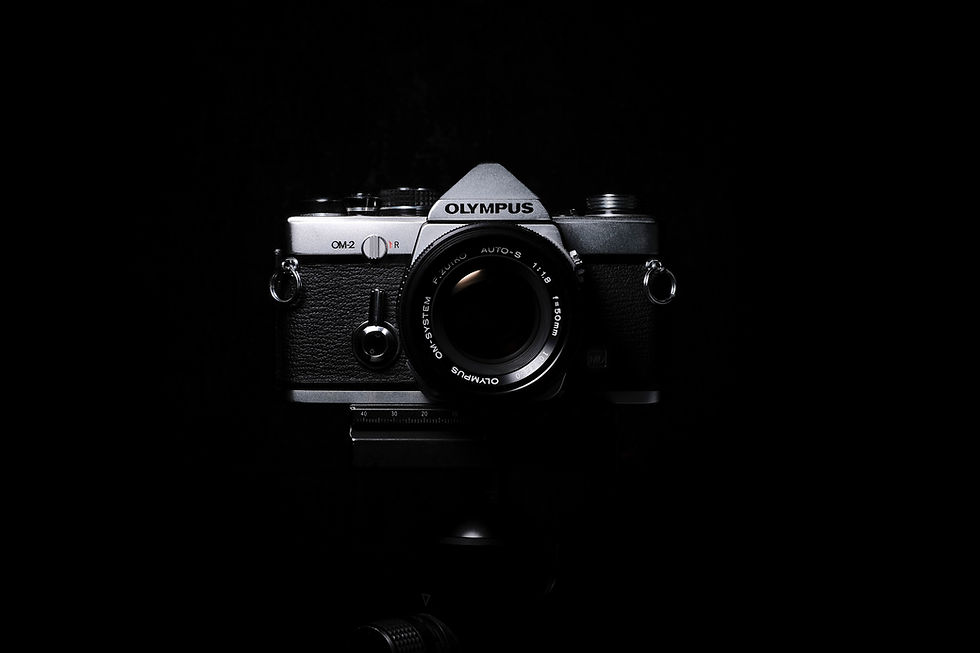
You want to travel light on a three-mile walk in cold weather. One body, one lens, and enough film for the afternoon. For this particular walk, a 35mm or 40mm lens on a compact rangefinder is ideal: wide enough for street scenes and market stalls, long enough to isolate details on the church facades and along the Thames.
Film choice matters more than usual in winter. The light is lower and changes quickly, so you need a film with enough speed to keep your shutter speeds usable but not so much grain that you lose the fine detail in the architectural subjects. ISO 400 is the sweet spot. Ilford HP5 Plus in black and white or Kodak Portra 400 in colour will cover most situations. If you want to push the film a stop for the darker market interiors, both stocks handle it well—though HP5 pushed to 800 takes on a grittier, more contrasty look that suits the Deptford end of the walk particularly well.

When choosing a camera for photo walks like this, compact rangefinders are hard to beat. The best 35mm film cameras guide covers several options suited to street work, from budget-friendly bodies to full-frame rangefinders.
Cold weather brings a few practical concerns. Batteries drain faster in the cold, which is another argument for a mechanical camera that does not rely on electronics for shutter operation. Film itself becomes more brittle in very low temperatures, so advance the winding lever gently to avoid tearing sprocket holes. And keep a microfibre cloth handy—the temperature difference between your breath and the cold glass will fog your viewfinder more often than you expect.
Working With Winter Light
Winter light in London is soft, directional, and brief. On a clear day, the sun sits low enough to create the kind of side-lighting that portrait photographers pay for in studios. On an overcast day—which is most days—you get a flat, even light that suppresses contrast and pulls everything towards mid-tones. Both conditions are useful; the trick is matching your metering approach to the light you actually have.
For the Deptford end of this walk, where subjects are close and the contrast between sunlit stalls and shadowed shopfronts is sharp, meter for the shadows and let the highlights take care of themselves. Negative film has generous overexposure latitude, and you will retain more detail in the shadow areas where the interesting textures live. If you are confident metering by eye, the Sunny 16 rule is a reliable starting point, adjusted down two stops for the overcast conditions typical of London in winter.

In Greenwich Park, the challenge flips. You are now in open space with even light falling across wide scenes, and the risk is flat, undramatic exposures. Look for natural framing—bare tree branches overhead, the iron gates at the park entrances, the curve of the path leading up to the Observatory. Understanding how shutter speed and aperture interact becomes especially important here: slowing down to f/8 or f/11 with a moderate shutter speed of 1/125s will give you the depth of field to keep both foreground elements and the distant skyline sharp—principles covered in more detail in the exposure triangle guide.
Composition in Context
A photo walk is not just a technical exercise. It is a narrative, and the best photo walks tell a story about a place at a particular time. The through-line for this walk is contrast: old Deptford against curated Greenwich, market chaos against park calm, low sun against overcast sky. If you keep that thread in mind as you shoot, you will end up with a coherent set of images rather than a random collection of frames.
In Deptford, shoot tight. Fill the frame with details: a hand arranging fruit on a stall, the peeling paint on a shop shutter, the condensation on a cafe window. These are the images that ground the walk in specificity. In Greenwich, pull back. Let the Naval College’s symmetry breathe, give the Thames room to flow across the frame, and use the wide angle to emphasise the scale of the park against the city skyline beyond. The discipline of finding photographic opportunities in familiar environments—what might seem like ordinary scenes—is something explored further in the post on finding photos in everyday spaces.
Pay attention to people, but do not force candid shots. Winter pedestrians move with purpose, heads down, hands in pockets. A figure crossing a pool of light on Creek Road or silhouetted against the river at Greenwich Pier can anchor an otherwise static architectural composition. But let the moment come to you. The slower pace of film—the knowledge that each frame costs money and cannot be deleted—naturally encourages patience. The impulse to fire off dozens of frames diminishes when each one involves a conscious decision about framing, focus, and exposure.
Practical Exercises
If you walk this route yourself, try setting a few constraints to sharpen your eye and force intentional shooting.
One Roll, One Walk
Limit yourself to a single roll of 36 exposures for the entire walk. This forces you to ration your frames and think before each shot. By the time you reach Greenwich Park, you should have roughly ten frames left. That scarcity sharpens decision-making in ways that an unlimited digital card never can.
Shadow Metering Drill
Pick three scenes along the walk with strong contrast between shadow and light. For each, take two frames: one metered for the highlights, one metered for the shadows. Compare the results when you scan the negatives. This exercise builds an intuitive feel for how your chosen film stock handles dynamic range in real-world conditions—a skill that becomes second nature with practice.
Tight and Wide Pairs
At five locations along the walk, shoot two frames of the same subject: one tight detail shot and one wider establishing shot. When you review the contact sheet, decide which framing tells the story more effectively. This is a curation exercise as much as a shooting one—learning to see the same subject at different scales is a fundamental compositional skill.
After the Walk
Resist the urge to scan your negatives immediately. Give yourself a day or two of distance before you sit down with the contact sheet. What felt like a brilliant frame in the moment may look flat on the light table, and the throwaway shot you barely remember taking may turn out to be the strongest image on the roll. Winter walks, because they are slower and more deliberate, tend to produce a higher hit rate than summer shoots—fewer frames, more keepers.
If you have been collecting images from walks like this across London, consider how they might work as a larger project. Thematic curation transforms isolated frames into a body of work. The process of assembling and editing a collection from individual photo walks—selecting, sequencing, finding the narrative thread—is something I explored in Street Anthology, and it changed how I approach every subsequent walk.
Deptford and Greenwich in winter will not give you golden-hour drama or sun-drenched colour. What they give you is something better suited to film’s strengths: quiet light, honest textures, and the space to shoot without hurry. Bundle up, load a roll of HP5, and walk south.

Comments